
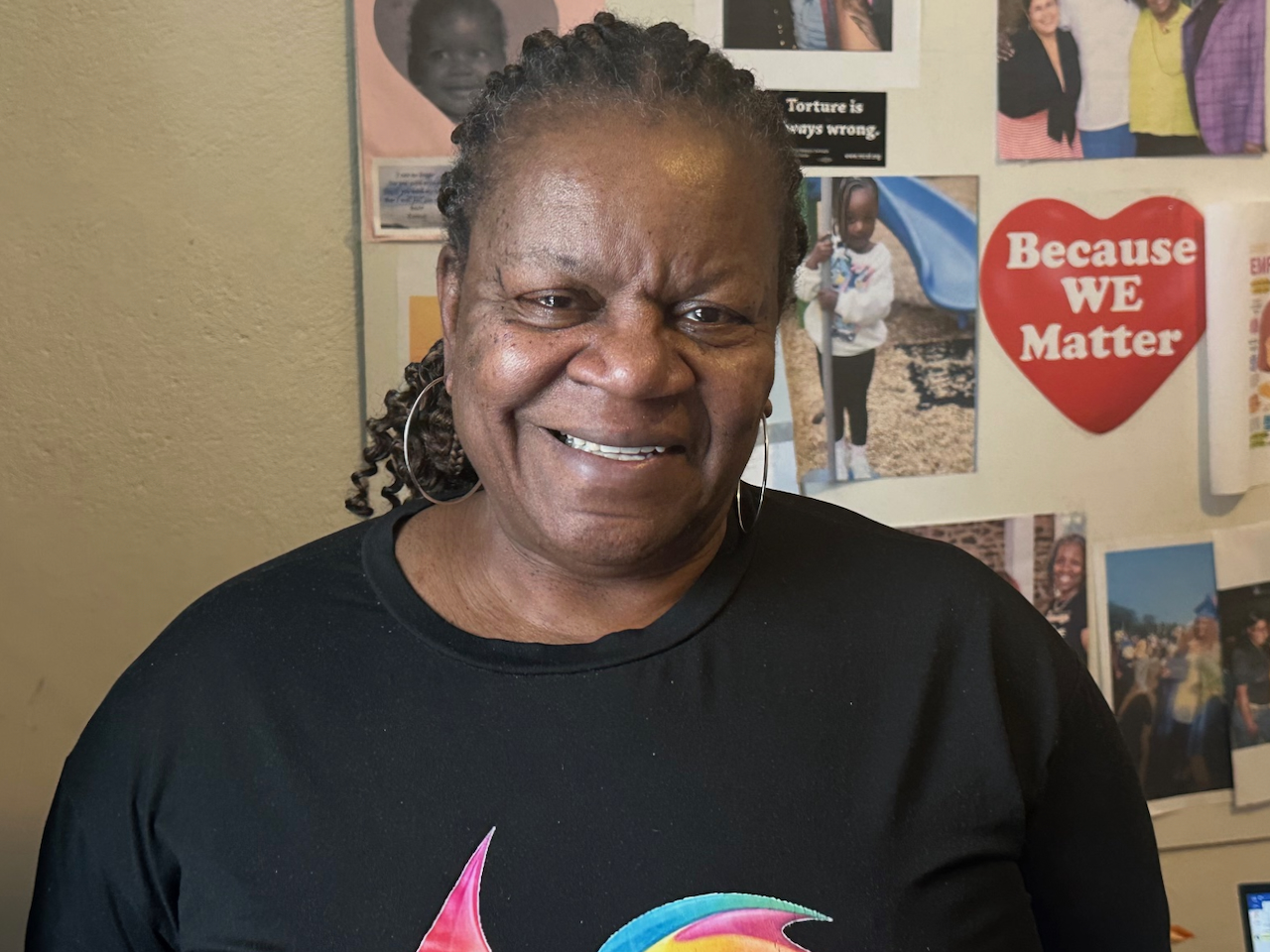
photo by Lara Herscovitch
One of the exercises in CLP is about identifying and clarifying our personal values. We each identify our top five values, writing one each on five index cards. Then we have to drop one, and another… until we are left holding the card with our number one, top value. How would you interpret this exercise today, what would your current One would be right now and why?
My top five values would be: integrity, honesty, empathy, family, being true to me.
Initially I thought number one might be integrity — but it’s family. Family is number one because they are my primary connectedness, what I am deeply rooted in. It’s the glue that holds me together during the most trying times in my life and brings me the most joy. My family, especially my children and their children, are the center of my world. My siblings are next in line.
Family would be the one that would be that I would be holding at the end of this exercise.
Integrity would be number two. I just want people — when I say something or do something — to know that it’s real, it’s not fake. I want them to trust what I say. And I think all of that’s part of integrity. It’s always been so important to me, no matter what.
I just wrote the testimony for a hearing the other day, and I was saying how hard it is for me to do. It was about the Department of Corrections, giving them funding. So many people within DOC — from the front line workers to the administrative — I really like and respect. And so it’s hard to say things against what they’re about, but my integrity won’t allow me to just act like everything’s okay with DOC just because I like the people.
And so at the end of the day, I just want people to always know that what they get from me is real.
Do you think family would have always been number one for you — say, if we had done this exercise 20 or 30 years ago?
Twenty or thirty years ago, yes — family was and always has been my center. More around honesty then — although, honesty is part of integrity too. So, I think integrity probably would have always been there, but some of the other five, I’m sure, would have been different.
Integrity is also one of mine. Because different people have defined it differently, I once looked it up and found it comes from being integrated — am I being who I am, true to why I’m here and the gifts that I’ve been given.
Even if, like I said, I have to speak against people that I really, really like. I don’t feel I’m really talking about the person because it’s a system; but I know a lot of people take their job as a personal thing. Like if I talk about the Department of Corrections, DOC people automatically get offended because it’s almost like I’m striking out at them. But I’m actually talking about the system.
So that’s why that at the end of the day, even though I may offend somebody that I truly love and respect, I have to be true to me.
What is one big, burning leadership question you are wrestling with these days?
Well, first of all, I never wanted to really be a leader. So, that’s it: how did I ever get pushed into leadership, and how do I exit that role and maintain what I built?
I just wanted to get to work done, but I didn’t see other people stepping up to do it. I felt that I can’t just let it go, I have to do something myself. And that’s what pushed me into the leadership position. Because I stood up, people started following me — almost like, ‘Oh, I wanted to do that, but you have the courage to do it.’
And so I think maybe that’s the thing with leadership. It’s about having the courage to do what’s right, no matter what the consequences.
That’s something I just wrote about recently, too. I have to always be honest about any situation, even though I know that tomatoes might be thrown at me — but I still have to stand. And if I have to stand alone, I stand alone.
When you share that you didn’t really want to be a leader, how far back do you mean? There’s a lot in that answer.
Yeah. One thing I remember my kids said to me when they were little — they said, ‘M, one day you’re going to be leading people in justice and stuff.’ I guess because they were watching what I was doing when I didn’t even think they were. They saw me as a leader, and I never forgot that.
But I never wanted to be a leader because I think there’s too many responsibilities; people look for you to do things all the time. It’s too much. I feel like leading takes a lot of my life. And at this point, I want to just enjoy more of my life.
So now, I’m trying to get out of this role, so someone else can step up. That’s what I’m trying to encourage — other people to step up, because I don’t want the work to just end.
When you say you want to you don’t want to be in the role, do you mean as Director?
I just don’t want to be in charge. And with leadership, I see it as being in charge. You heard me when you asked if I wanted to include a title by my name here — I didn’t even want to use that word. I mean, if I have to be something, I say Director, because I’m directing an organization.
My kids tell me all the time — especially my older sons — that I’m so humble, because different things will come up. Like my son said he was searching for leaders in the community recently, and my picture came up. He put it in our family chat, everybody was so excited.
To me, it was like, ‘oh, that was nice.’ And they said, ‘See, Ma, there you are again.’ I was excited because they were excited; but I’m just doing what I think anybody could do — and what we should all do. I don’t think I’m doing anything exceptional.
Has your leadership always been in justice system reform?
No, it’s been different issues. It started with prisons; I actually had my first experience with somebody being in jail, when my brother went to jail as a young kid.
It was his first offense. I believed in the system. And I got my first lesson in how racist and wrong this system can be about convictions and all of it — I had no idea what goes on. I’ll never forget — he got his shoulder broke. I didn’t think nothing of it back then, because like I said, I had no clue about prisons. I just figured, okay, he got in a fight. But now, as I’m older, I always wonder what actually happened to him.
I got together with this group of women — they called themselves Citizens for Humanizing Criminal Justice — at Yale. We worked on how we can change prisons — back then we only had one. We were able to get Department of Corrections to have trailers on the grounds and on the weekends, families can sign up to stay in them and be with their family member over the weekend. I mean, that’s back when they really cared about families staying together.
So that was one of my first victories, it gave me courage — it’s why I knew we can really make some changes.
And then it also focused in education. You know, our kids really are not getting the education that they deserve in the inner cities. And so I did a lot of work around that.
Was that when your kids were younger?
Yeah, when they were little and of course they were going to school, so I wanted to always make sure that they got the best education they could. Which is one of the reasons why I lived in New Haven.
I was born and raised in New Haven, attended public schools. Back then, the schools had quality. It was highly academic when I was going to Hillhouse; I don’t see that now. I see a lot of kids just going to school as a social event — not that invested in getting a great education. Not all kids, but I think a big part of them.
So it was about education, and then it was about the police. Because back then, police were always messing with the kids in the community. And it just bothered me. Like, I would see them all the time harassing kids. Kids would be walking down the street — then, what they called ‘the beat down crew’ under the New Haven Police would jump out of a van. There’d be a bunch of guys jumping out, and then putting the kids upside a wall and patting them down. All that kind of stuff. And I just got sick of looking at it.
So a lot of my advocacy was around changing the way police handle our community. And that’s when I got — I wouldn’t even say the tomatoes, I think they wanted to bury me if they could back then. A matter of fact, there was one officer who actually said that to me: “I’m going to bury you.”
Wow.
Because nobody else was saying anything about what they were doing. So, of course, they can pick me out and harass me.
Then when my kids got a little older, they would harass my kids. One of my sons hardly ever had his license on him, and they knew that about him, so they would purposely stop him. He got over $300 in tickets for driving without his license — or any little thing that they could. They would give him tickets and say, “Give that to your mother.” So that’s why I knew it was purposely — because of what I was doing.
But just like now, I was not going to let it stop me from doing what I have to do. I just hate that my kids have to suffer along with me. I said that to them when they were older: ‘You know, I really want to do this work, but I don’t want to see you guys get hurt.’ And I asked them if they think I should stop. They said no, so that’s how I continued.
As you said, they saw you as a leader; they must have understood then what was going on.
Yeah, I guess so.
So I’ve always been involved in this work. I started hooking up with this organization out of California, Critical Resistance. They educated me a lot on the system. We tried to bring a chapter to New Haven, did a lot of work with Yale students, trying to get some support about doing something around prisons.
At the age of 16, my youngest son went to jail. He had an argument with his girlfriend — he didn’t like the way she was raising his daughter, having people smoke weed and stuff around her. So they got in an argument one day and he never hit her, but he threatened her. And he got arrested. I’ll never forget Judge White. He is Black, and he was really, really hard on Black people. And he was hard on my son, who got arrested a second time, threatening. Judge White said, “Well, I’m just going to let you stay in jail.”
At the time, my son was suffering a lot from some of the kids in the community — it was a time when kids in the community were getting involved in gun violence, and they were getting killed. So kids back then were always dealing with a funeral or something.
My son had gotten depressed, so we got counseling. And when he went before the judge, the counselor asked the judge, could he give him an alternative to prison — because he said, ‘I’m working with him, his mental health right now, and I don’t think that would help him.’ And the judge just said, ‘well, he can get it in jail.’ That was his attitude. And so that was the beginning of my son being damaged by the system — he went in, not even convicted of anything, and he was young.
He’d never been to prison, so he would buck up against the officers and get tickets — too many tickets and they would put you in what they called a supermax, which was Northern Correctional. They couldn’t put a child in there until they turned 17. The day my son turned 17, they put him there. A big part of him was lost there.
And that’s when prisons took over my life. It was like it took over the entire nation. I could never walk away from the work. I just didn’t want to leave.
And that’s also why this work will never go away for me. I was never going to rest until Northern got shut down. I got a lot of other people and organizations to support that. I even went to the international community and asked a specialist on torture — would he write a statement about a place like Northern? And he did. So with all that in the lawsuit, we were able to shut it down.
Amen.
Yeah. It should have never existed in the first place. The mindset of somebody who could think of something like that, to do to human beings, is just — I just can’t understand it. It’s got to be straight evil.
Absolutely shocking. Thank you for sharing. Your leadership question makes total sense, to be part of the movement while not having to lead it, to also find some life balance. That question of how to rest, when there’s always more to do.
That’s the thing that gets me. That’s what tires me out. It’s like when I think back how long I’ve been doing this and some of the stuff that I was fighting for way back then, it’s gotten worse instead of better. And trying to hold on to the victories. I find so many in this work are satisfied with the low hanging fruit, the small wins. Not me. I’m tired of the baby steps to justice.
Especially now, I’m 77. I want to be able to see after all these decades of work that the outcome is significant change in the way we treat people, that we recognize the humanity in all of us. I want to witness, in my lifetime, a society where all people are seen as worthy of love and compassion. I’m waiting to see that change in the U.S. I think we’re a long way from that — yet I believe it’s possible.
I’ve always been deeply frustrated by the incremental change in justice reform — how small some of the ‘wins’ actually are, in the face of all that needs to be done.
Yeah. I’m starting to focus more on our young people, because I just see so many young kids being harmed by the lack of support within their schools and neighborhoods. The opportunities my children had growing up are no longer available to them. A lot of untreated trauma and lack of hope for a brighter future. So much of their behavior is criminalized through the school system since the introduction of school-based officers. Many end up in the justice system and upon return home, they are exhibiting anti-social behavior. They are angry, rebellious, and reckless — and the response is more punishment.
Absolutely; we set them up to fail and then punish them for failing. How do you stay inspired, what gives you hope these days?
I just feel without a hope, you don’t have anything, so that’s my driving force. I never want to get to the point that I’m hopeless. Because for me, when you’re hopeless, you’re not even living life, you’re just in survival mode with a cloud of despair hanging over you. You can’t see your way out of despair.
So that’s what keeps me hoping because I feel without that, I have nothing to hang on to.
Does your faith give you hope?
It is faith, yes. I was born and raised in a Baptist church since I was a little girl; I was in the choir and an usher greeting churchgoers. One of my uncles was a deacon, and my mother was like the mother of the church, her dad the grandfather of the church. So we were always there — almost every single day of the week. I was surrounded by people serving others. And so, service comes naturally for me — that’s what I’m grounded in.
My spirituality evolved from a child believing that there’s a God in the sky, into my belief that all of us have a god within, and it is that god that strengthens us to weather the many storms in life. In other words, I believe in a higher power, something much bigger than me, and it is that higher power that protects me. I believe we all have a purpose in life and we have a duty to live in that purpose — and our reward is happiness, abundance and longevity.
Do other people give you hope – like those in the movement, or young people in general, or your kids?
Most of my hope comes from within. My kids supporting me gives me hope that they will carry on the work when I’m gone, because they know how important it is to me. They support me now by showing up at events and influencing other young people to get involved in justice work. Many students becoming involved in this work gives me hope. Many say they learned a lot from me and I inspired their path once they graduated. Many have gone on to careers involved in justice work.
All of those who came before me, whose shoulders I stand upon, gave me hope.
And blessings for every day that I wake up — because so many people my age, friends that I grew up with, and even younger family members have transitioned from life. I know that I’m here because I have a purpose, and I live and walk in that purpose.
How would you name that purpose, what would you say it is?
It’s hard to define what it is, but I feel we all have a purpose in life, something that we were born to do, part of our life journey. It’s like a calling. Something you didn’t plan and yet you find yourself there and you can’t seem to walk away even when you are so tired of the journey.
I tell people all the time that I’m so tired of this work. I’m tired of families not fighting for their loved ones. I find myself fighting harder for people than those who say they love them. I’m tired of people accepting less than a fulfilled life and accepting what is, doubting that it will ever be anything more than what it has always been. I’m saddened by the indifference shown toward the marginalized among us. I’m tired of attending legislative public hearings and feeling unseen and unheard by legislators who can’t relate to the plight of the most vulnerable among us. Some don’t know — yet others know and don’t care because injustice doesn’t touch their lives.
When I want to walk away, I can’t. And so I believe it’s got to be God’s calling on my life because I’m still walking in it despite my wanting to do something different with the rest of my life.
It brings me back to what you said about integrity and being true to yourself, that ownership of who you are and your agency in the world, what you choose to do with the gifts and skills and superpowers that you have.
Yeah, yeah. The fact that for decades I did this work as a volunteer. I never thought about being paid. It was just what I did because it mattered to me after my initial experience of having a brother end up in the system and finding out so much about how injustice prevails, is untouched and allowed to flourish with impunity.
Decades ago, there were no paid organizers doing justice work. It was always heart work. Compassion-for-others work. Organizers, in the past 20 or more years started being recognized, respected and paid for this work, at least in Connecticut.
Matter of fact, my administrator takes care of my budget. Not only am I the lead organizer, primary legislative engagement person and director, I am also the grant writer. When I worked on grants for the year ahead, I questioned why with all that I purchase, give and pay employees I have so much money left over at the end of the year. She reminded me that I have a line item in my budget yet never pay myself. I never think about myself because I’m blessed in so many ways and my greatest reward is making positive changes in the lives of those primarily forgotten in our society. I’m not a martyr; paying me is simply not a focus. Last year she convinced me to pay myself.
You’ve earned it and then some — and then a lot. That part of nonprofit work always feels off to me somehow, like it’s diminishing sacred work or something, to be paid to alleviate pain and suffering. And I know it’s not that simple, we all need to make ends meet, and certainly the world would be healthier if everyone did work that’s helping and not destructive.
Yeah. What feels wrong to me about many nonprofits is that the top people are making millions and generally have no real connection to the people who they say they’re there to serve. They write beautiful grants claiming to provide great services, and become so familiar to funders that they don’t even have to provide results-based accountability.
To get into business simply because there is a need and money can be made is sinful to me. Some people call it “pimping the pain of others.” How many would be in those roles if there was no big salary and benefits attached? There are people working in nonprofits who don’t even like the people they are supposed to serve. Many fail to improve life outcomes for those they serve. Some even harm them with promises they can’t keep. That to me is wrong.
Yes. As you’ve been reflecting, and here’s an understatement — this work of transformational change is hard, and can be draining – physically, intellectually, emotionally, psychically, spiritually. How do you recharge, restore, take care of yourself, rekindle your fire?
I feel I am truly blessed with a family that supports me. My kids overwhelmingly support me, and remind me to take a break from time to time. At times they feel I fight harder than they fight for themselves, and at times it negatively impacts my health, mentally and physically. I listen and try to be mindful of self-care.
I try to take vacations as much as I can — an island vacation, Bahamas, Mexico, or warm climates within the country like California or Florida. Retreats are opportunities for taking care of me, Beyond Diversity 101 or Story Week or things like that. I get to go away and I always get something out of it. They are restful, restorative and insightful and put me in a space with people on the same journey as myself.
One of my sons lives in California with his three girls. I used to go out there for like a month of the wintertime when I first retired. Now it’s challenging to get a week away, because I’ve gotten so deeply involved in policy work. I really want to be on vacation now, but I’ve got to be here to get things done while the legislative session is open.
Just knowing I’m helping somebody warms my heart — people that I feel society would rather be silent and unseen and unheard. I get a lot of cards on different holidays. Knowing people from the inside appreciate my efforts helps nourish me. Receiving acknowledgment from people that I probably will never know warms my heart.
A couple of people in prison have said, ‘you’ve given us hope that we never had.’ And so that’s another thing. I hear that every time I want to stop this work. I feel like if I gave them hope, it’s my duty to stay with it — I can’t walk away, I just feel like it would be unfair to them. So that’s another thing that keeps me in the work.
Other than those big things, I get the pedicures, I’ll go get my hair done, shopping, and bingo excursions from time to time. I love karaoke. My son used to have a bar in West Haven right down the street from me, and every Tuesday he would have karaoke, because he knows I love it. Every Tuesday, no matter what’s going on in the world, I could go and sing my heart out. Singing is a stress reducer. It feeds my soul. Always has.
He sold his place and moved to Ansonia. Every opportunity to sing I try to go, but it’s not the same as when it was at his place. People came from different cities across the state because they felt we were more like family. So when he sold it, people were really tearful, like we broke up the family. My son works too much anyway, so I’m glad he gave that one up. But, oh my God, that was my therapy.
Do you turn to music in other ways?
It warms my heart, my soul, it’s everything. Music is my savior. It’s the calm in every storm. I exercise to music. It helps me extend my workout because I get caught up in the music and time flies. My primary music is old school R&B. Next to that is contemporary gospel. I am still connected to my roots in the church.
I love to cook for my family. It’s an opportunity for us all to come together and have fun. Up until a couple of years ago, all the kids, grandchildren and some friends of theirs would come to my house on Sunday. I kind of passed that off to my youngest girl because she has a big house and getting up early and cooking huge meals became tiring; so now I’ll cook some food items and bring to her house. No clean up for me! Just eat, have fun and go home.
That’s like what you’re trying to do with the justice leadership — still be involved, but don’t lead it.
Exactly. Let someone else keep the tradition going because it is important to me and I can have it without all the fuss.
Would you please introduce us to someone you are/were close with personally — maybe family, teacher, friend, or mentor — who shapes you and how you view leadership and possibility for a better community and world?
The most important person in my life from a child up until now is my maternal grandfather, Jefferson Lee, Sr.
I called him Granddaddy. So many lessons he taught me that I carry with me today. And so he would definitely be number one. He was one of those people — everybody knew him. He lived to 103. I always said, ‘I want to live to 103 just like you’ — because he was so independent, and that’s really important to me. He was not one of those grandfathers who sat or rocked in the chair in a home somewhere. He was well-involved in life.
One time, I was at his house and asked him to give me his clothes so I could take them to my house and wash them. “No, daughter. I wash my own clothes. Everything I can do for myself, I do for myself.” That’s my motto.
He got up every morning, walked to the store. Everybody in the community knew him and looked out for his welfare as he walked the streets on his own. They called him Papa Lee.
He lived upstairs in my mother’s house because she wanted him close so she could look out for him. He was an elder, yet not elderly. He worked until they told him he couldn’t anymore. He used to work on this truck, delivering eggs for a Jewish family in the community. When he got older, they told him they had to let him go because crime was starting to creep into the community, and they didn’t want anything to happen to him if he was in the store by himself.
He had a garden in the backyard, so we always had fresh fruit and vegetables. He also planted flowers, and every summer we looked forward to roses and sunflowers.
One of the important things that he planted in my psyche a long time ago, is to stay away from doctors. He didn’t go to doctors and he was very healthy. To this day, I rarely go to a doctor. I find that when you go to a doctor, all they do is prescribe pills that all seem to have countless side effects. He steered me away from that. Drugs don’t heal anything; they simply cover up the symptoms. My doctor knows how I feel about medications and so she knows if anything is ailing me she will say, ‘well, I know you don’t want anything for it.’
So I do research for natural healing. An example, recently my potassium was low, and the first thing my doctor wanted to do was prescribe potassium pills. I did my research, and found foods rich in potassium and made them part of my diet. Foods like bananas, potatoes, spinach, kale. Within a short period of time my potassium levels went up.
My granddaddy was like the father of the church too. They actually did an article on him when he turned 103 — I think it was The Register. They took a picture of him and two of my uncles, and talked about how he was able to look so young at his age.
So he was always this dynamic personality. He was born in South Carolina, and he talked about the struggles in the South before they all came up here; the racism, people getting beaten and killed which led all of them to migrate North — mostly to Connecticut.
He was certainly the leader in our family and in our church. He never learned how to read and write and yet he was the wisest person I have ever encountered in my life. There are things going on today which he talked about a long time ago and I recall those conversations and wonder how did he know this back then? The wisdom he left behind is invaluable.
Because both my parents worked all day, he and an aunt were an extra pair of eyes for them. He was a very important fixture in our family. He had 20 siblings and was among the last few to transition from life. His wife, my grandmother, passed away while I was a young girl. I recall her cooking and baking. She died suddenly one day while baking. I believe it was hypertension.
If I had to pick another person beyond him, it would be Malcolm X. I just really love the person that Malcolm X was. I learned of him probably in my 20s.
I remember when Martin Luther King — I’ll never forget when he got killed. That was the year that my oldest child was born. I always saw his way, the way he preached nonviolence as something I could never quite attach to. If someone was beating on me and spitting on me I don’t think I’d have it in me to turn the other cheek.
I understand what Martin was trying to do, but, you know, all that talking about nonviolence and allowing other people to be violent towards you? It’s just not part of who I am. And that’s why I was more for Malcolm X than Martin. I like Malcolm’s talk about courage, integrity, and demanding justice by any means necessary.
Do you feel like you’ve walked with Malcolm X all along the way?
I do.
I think a lot about the continuum of advocate and activist, the ways we need both to make positive change, in different ways.
I think my journey has been both of them mixed. I don’t believe in a world that’s full of violence, or that everything is about violence for those who oppose real justice, or that you can appeal to the hearts of hateful or evil people being non-violent. At the same time, I know violence is really not the answer. It’s not the way I choose to gain liberation. I have also taken on the role of advocate trying my best to bring change through dialogue and working within systems.
I found activism brought immediate change through protests and civil disobedience, yet not lasting change — so I go back and forth and see what is most lasting. For the past decade, it’s been a combo of both, with more efforts placed in advocacy, meeting with stakeholders, correctional staff, legislators and impacted people to see what works best and is more lasting. At the same time, I do not shy away from protests.
One of the reasons I went from protesting in the street to getting involved with policy work is I didn’t want to risk jail or prison in my efforts to bring change. Police are too quick to become violent. I thought about it after a while, and saw that the work most beneficial is in policy work and collaborating with system administrators.
So that’s where I have landed, even though it’s extremely frustrating work because systems don’t accept change and politicians will be politicians. Their narrative is always ‘incremental change is better than no change.’ I hate it. I’m weary of baby steps to justice and the undermining of any change made. When I go up there and I’m seeing the people that we have to appeal to? And they want us to accept this incremental justice? I’m tired of baby steps to justice. Period.
100%.
It’s frustrating, yet giving up is not an option. Walking away is not an option. The session opened on February the fourth. I chose not to show up the first week. I needed to pause before heading back to Hartford. For the past 5 years, each session has been more frustrating than the one before. Some of the legislators I could count on are becoming more laid back and reluctant to do the heavy lifts. At the same time, new legislators are coming onboard and I need to be in Hartford to engage with them to see who will be my champion legislators. One of the other reasons I like showing up is getting together with all the activists and advocates I worked with for years.
To get bills brought up for a vote and passed into law takes a lot of compromising. It seems like few have the courage to do the real work. I hate compromising on my principles because it makes me feel I’m giving up on my integrity — and that character trait is much too important to me. On one hand, compromising is the willingness to get something moving to get a piece of legislation passed, yet not what I really want. I’ve been on this spinning wheel way too long, compromising on my principles and each year I’m less inclined to accept compromise, knowing it is not bringing the change I want to see.
For example, I tried to open up an ombudsman office independent of the Department of Corrections. I was tired of getting overwhelmed with all the letters and emails and calls that I would get from incarcerated people and their families. I put a lot of effort in getting legislation passed to open the office. I thought if I could get funding to open the office with paid employees to do what I had done for decades as a volunteer, then I could take back my life.
No surprise, it didn’t work as I planned. I made an error in judgment supporting this attorney in getting the ombudsman position. I believed he was committed to doing all he could to support the well-being of incarcerated people. My dream was the ombudsman would have regular meetings with the commissioner and administrative staff to talk about policies that are outdated and harmful, and need to be reviewed and changed. I envisioned town hall style meetings inside each facility maybe once a month, in which incarcerated people and staff members met and engaged in conversations in an effort to break down the you-versus-us mentality. There would be regular inspections to make sure DOC was in compliance with the law.
I chose not to be a member of the team because my efforts were about giving incarcerated people a “lifeline” so I could also let go and take my life back. What I envisioned is not happening, and I’m so disappointed. Yet what can I do at this point? I don’t want the job. I had hoped that we had someone deeply committed to incarcerated people — and I don’t see that in the current administration. So deeply disappointing.
I’m so sorry to hear it. I know there’s so much more to say, and I also know your time is limited; thank you for taking the time. As we move to close, what do you recommend to us, in these categories:
- Reading – The Autobiography of Malcom X, The Riot Within, the story of Rodney King’s life after the brutal police beating, Becoming, by Michelle Obama. It depends on what you’re looking to find out about.
- Listening – For me, it’s always music, be it spiritual or revolutionary.
- Eating – Healthy. Low fat, low sodium, low sugar — mostly green leafy vegetables, fish, chicken.
- Watching – Documentaries, to educate yourself about what you don’t know, yet should — relative to mass incarceration and how the system works to control the lives of certain people in America. I know one thing that really had a profound impact on me, but I don’t know if white people would even get the same thing out of it that Black people get out of it was Roots – made in 1977 and re-made ten years ago. But I could only watch one time. One of the most impactful and crushing scenes was when the overseer — a white man — forced another African male to beat Kunta into submission because he refused to give up his name and accept a slave name after being captured and brought to America. Also, a lot of movies that relate to our struggle in this nation that I can’t watch because it’s very painful. It’s not entertainment when we are living those painful stories. Movies like Just Mercy. My favorite actor is Michael B. Jordan and I generally watch everything he stars in, but movies like Fruitvale Station and Just Mercy I chose not to watch. Recently I pushed myself to watch Fruitvale Station — I cried and I cried and I cried — too much painful reality for me. At times I hear people say, ‘oh, that was such a great movie.’ I can’t find it entertaining even though my favorite actor is playing the major role. The last one I watched like that was years ago and I went through so many emotions. It was The Hate U Give.
- Laughing – Anything with Steve Harvey. He is so funny, I watch countless episodes of Family Feud just to hear some of the comments he makes to contestants.
- Wildcard – your choice – Retreats, because it’s a longer period of time and you get to a lot of adventurous, fun things in there, but you also indulge in what’s tough, powerful and I always find them to be healing — plus they take me outside New Haven County.
Learn more about Barbara at the Stop Solitary CT website or Instagram, join open monthly community meetings (speakers, Q&A, door prizes, and concluding with bingo games)
Get in touch with Barbara directly: barbfair848@gmail.com
Interview with The Circle’s Creative Director & Editor, Lara Herscovitch (Cohort 10). To reach Lara directly: thecircle@clpnewhaven.org or Lara@LaraHerscovitch.com