
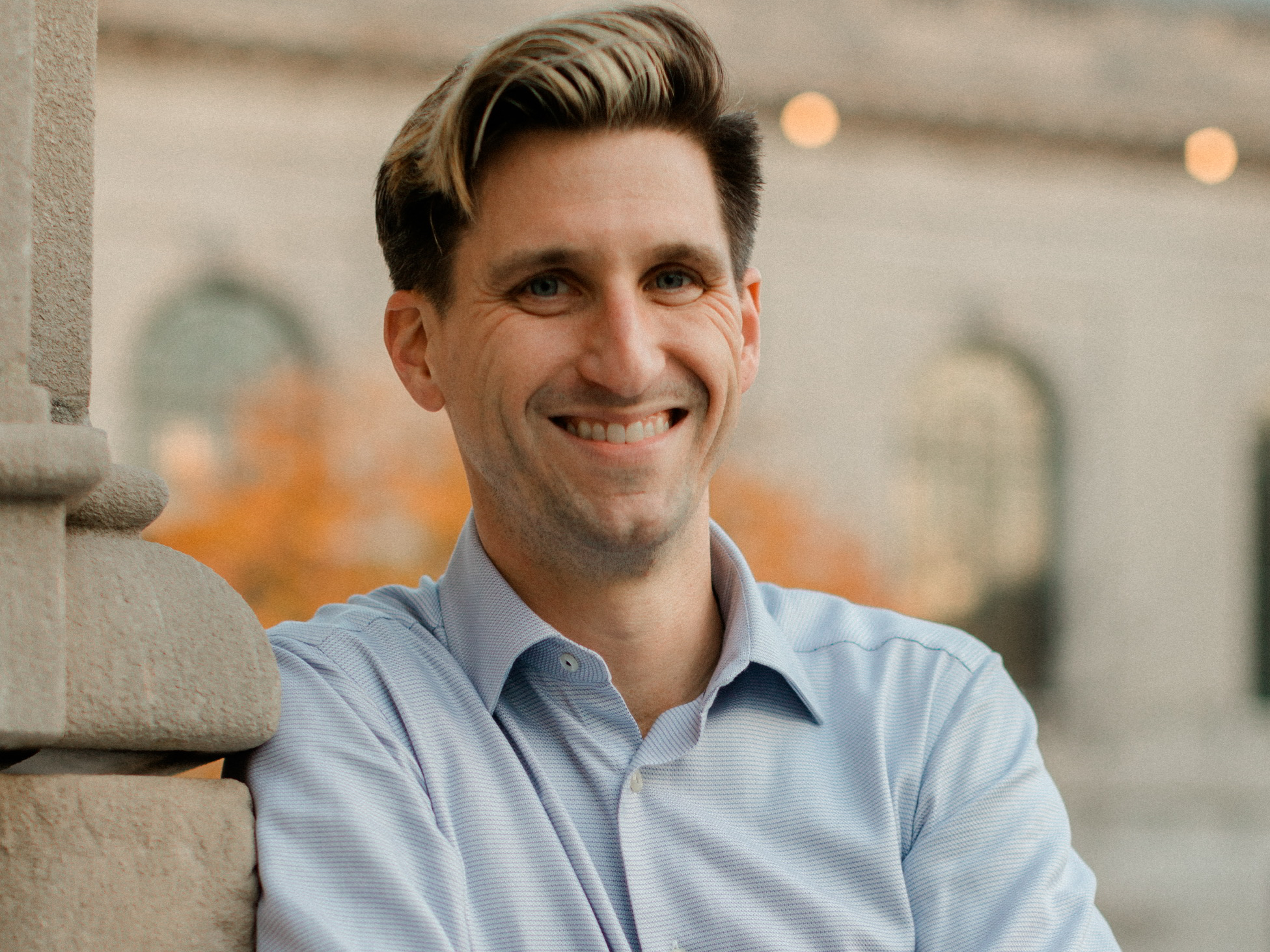
contributed photos
Thank you for taking the time to talk today. There are lots of different places we could start, let’s dive in with geography. When we met at Cohort 33’s closing retreat, you were living in New Haven, and today you’re re-settled in Portland, Oregon. Tell me about that transition?
I was born and raised in Corvallis, Oregon and in my thirties moved to Portland where I met my wife. A few years ago, we knew we’d be spending at least a year in New Haven while she pursued her sleep medicine fellowship. We have family in Connecticut, which made that transition a lot easier.
I love New Haven and Connecticut. Our daughter Parker was born there. Her birth — the circumstances of it — were not what we expected and not what we were mentally prepared for. She was born a few months early and spent the first three months of her life at the NICU — neonatal intensive care. It happened during CLP, and there was one meeting that I missed because I wasn’t emotionally… I just couldn’t do it. There would have been no way for me to participate fully.
It’s touchy anytime your child is in the NICU, no matter the reason. It was really scary, and at times pretty isolating. It is a very scary path for parents; it was so draining and so hard, and it wasn’t even close to the most difficult path we could have walked.
That experience reiterated that, even though we had amazing people and family in Connecticut, we needed to be home, and home for us was Portland. Before Parker’s birth, we were discussing whether we should stay in New Haven longer or even permanently, but Parker’s birth and NICU stay changed things. We moved back home to Portland late last year… and we are never moving again.
How is your daughter doing?
She’s doing great! She’s developing, she’s happy, she’s thriving, she’s doing swim lessons, music lessons. And she’s really good at climbing. The other day she was on the bed and started making her way to the edge, so I was spotting her… and she didn’t even need my help and just lowered herself down to the floor by herself! Definitely a proud dad moment.
So glad to hear it. How old is she now?
She will be one year old tomorrow, and we’re going to have a party. It’s gonna be great. If you want to fly in from Connecticut, you’re super invited!
Thank you! Lots to celebrate for sure, including the exciting news that you’re running for office. That’s a big decision, has it been in-the-works for a long time?
The short answer is, I’ve known for a long time that I wanted to run for office some day.
The long answer: I was a sensitive kid, very attuned to when things were unjust or unfair. I had a problem with “the system,” and as I became a young adult I was one of those “f*** the system — this sucks, they’re all screwing us over,” kind of angsty, anti-system, anti-establishment young people.
I was late to graduate high school and was late to start college. Lots of reasons for that. But when I finally went to community college, I was majoring in journalism and I took a political science class. It was that class where, for me, it clicked — if I don’t like the system, if I think it’s unjust, if I think it’s unfair, if I think people are getting screwed, then I could be angry… or I could learn how this stuff works and try to change it from the inside out.
So that is what I decided would be my path. I changed my major, graduated from community college with a transfer degree, and got a political science degree from Oregon State. Then I was in public service for the next 12 years, learning and growing and failing and trying and succeeding. Learning how to be more disciplined and regulate myself better. I got to intern and work at nearly every level of government — federal, local, state, regional.
I was around elected officials a lot. I saw the pressures they were under. I saw elected officials who were good people doing their best. I saw elected officials who maybe started that way, but maybe convinced themselves that they and they alone could solve things and did everything to preserve their position of power. I saw some who just seemed ego-driven, bad actors. I mean, I saw all of it.
The whole time, I worked really hard to bend anything I had influence over more towards justice, trying to make things better for the people who are most impacted by decisions the government makes — people who don’t have a ton of power and influence over stuff.
I just kept doing that as much as I could, while knowing that someday I might want to throw my hat in the ring. So, it’s a thought that I’ve had for a long time.
When you shared that you were aware of when things felt unjust or unfair, how old were you?
First of all, I know this isn’t a unique experience, and I’m not claiming it to be. I’d say it was when my mom would ask me or direct me, tell me, demand me to do something. She grew up in Catholic school and experienced disciplinary, authoritarian, top-down, command-and-control parenting as a child herself, and some of that showed up in her own parenting at times. It was an interesting blend with the more creative and free-flowing and emotionally unregulated parts of both of my parents’ parenting.
She would say “you need to do this” or “you need to do that.” And often I found that she was unwilling or unable to explain the rationale behind it; just a “because I said so.” I knew even when I was that young, I wanted to understand why you’re telling me to do it, because I don’t understand and it feels really unfair. That came early — five or six years old.
Or I would overhear the same stuff happening between teachers and kids. They would be told to do something and it wouldn’t be explained, or the explanation wouldn’t make sense to me. It would feel like the reasons for the structure and the rules and the policies and the discipline were not… rooted in reality or common sense or the common good, or what was good for us.
And look, I’ll admit that even sometimes when the answers did make sense to me, I’m a kid and I would maybe rebel against it anyway.
I hear you. I was helped by a fellow CLP alum to reframe that “rebellious” name-it spirit or habit as ‘divergent thinking,’ if that’s helpful.
Yes, that’s a better way of saying it!
The other part came as I got a little older. I was in high school during 9/11. How quickly it became clear that our government was lying to us about why they wanted to intervene in another country — we’re literally just being lied to. Or disciplinary rules at school that felt like the outcome was either disproportionate or unjust to what had happened in reality. Like when there was an interpersonal conflict, and how the people looked or their reputation would inform the disciplinary or the official response.
So it started with things that affected me as a child, but very quickly it was like I was seeing it everywhere. And as I got older, it became clear that what’s been designed are systems that don’t always have the best of intentions, or consider the outcomes of those who are impacted. They need to; and we need people who believe that they can and work toward that.
I appreciate you naming the connection between believing in what is possible and making it happen. And I hear that in some ways your decision to run for office was life-long, and in other ways must have been quick, on the heels of deciding to move back to Portland?
We were getting ready to move, booking flights and doing all this stuff, and I was just checking in with what’s happening in Portland and Oregon. I saw that the election was gonna come up the following year, and my district and another district were up for the vote in ‘26. So I was like, oh my gosh, wait a minute… should I think about maybe running? And I’m like, is there ever a good time to think about doing something like this? And I think the answer is no, there’s never a perfect time. But I’ve always wanted to do something like this. Maybe this is not a ‘sign’ necessarily, but maybe this is a good time to do it.
So I talked with people who I trust, who know more about this stuff than me. Is there a place for me? Is there a lane for me here? Is this something I should seriously consider? And I kept getting back the answer, ‘there might be.’ And I was like, really? Me?
I don’t know if I could have even been in a position to make that decision at that time had it not been for CLP. Full stop. I really don’t. It’s something I’d been thinking about for a long time, but I am not sure that I would have made this decision this year or could have, if it had not been for CLP. That is the truth of the truth.
Do you have a sense of what it was about CLP that made you feel comfortable saying yes to running?
Well, I was very close to not applying to CLP because I didn’t trust that my presence would be helpful or additive. I was not interested in taking up space for the sake of it, and I struggled in the days before the application was due. I went back and forth, I talked to my wife about it. I was new to Connecticut and wasn’t from here, and I have a lot of privilege and I’ve had a lot of opportunity — so who am I to take up space?
And I am so glad that I did apply. I tried to do my research — what is CLP about, why does it exist, what’s the purpose of it? And, what’s really the purpose of it? Because sometimes you get groups or cohorts or organizations, and you read about them, and you get an impression, and then you start talking to people, and you realize it’s something else, right?
Definitely.
And that was part of my worry too. I was like, what’s the real on this? It made me feel so much better talking to my boss Laura and my colleague Esther, who are both CLP alums. What I took from what they shared was that the experience you’ll have in CLP is highly or entirely dependent on and about the other people participating. There’s no specific “you are going to get these things from it.”
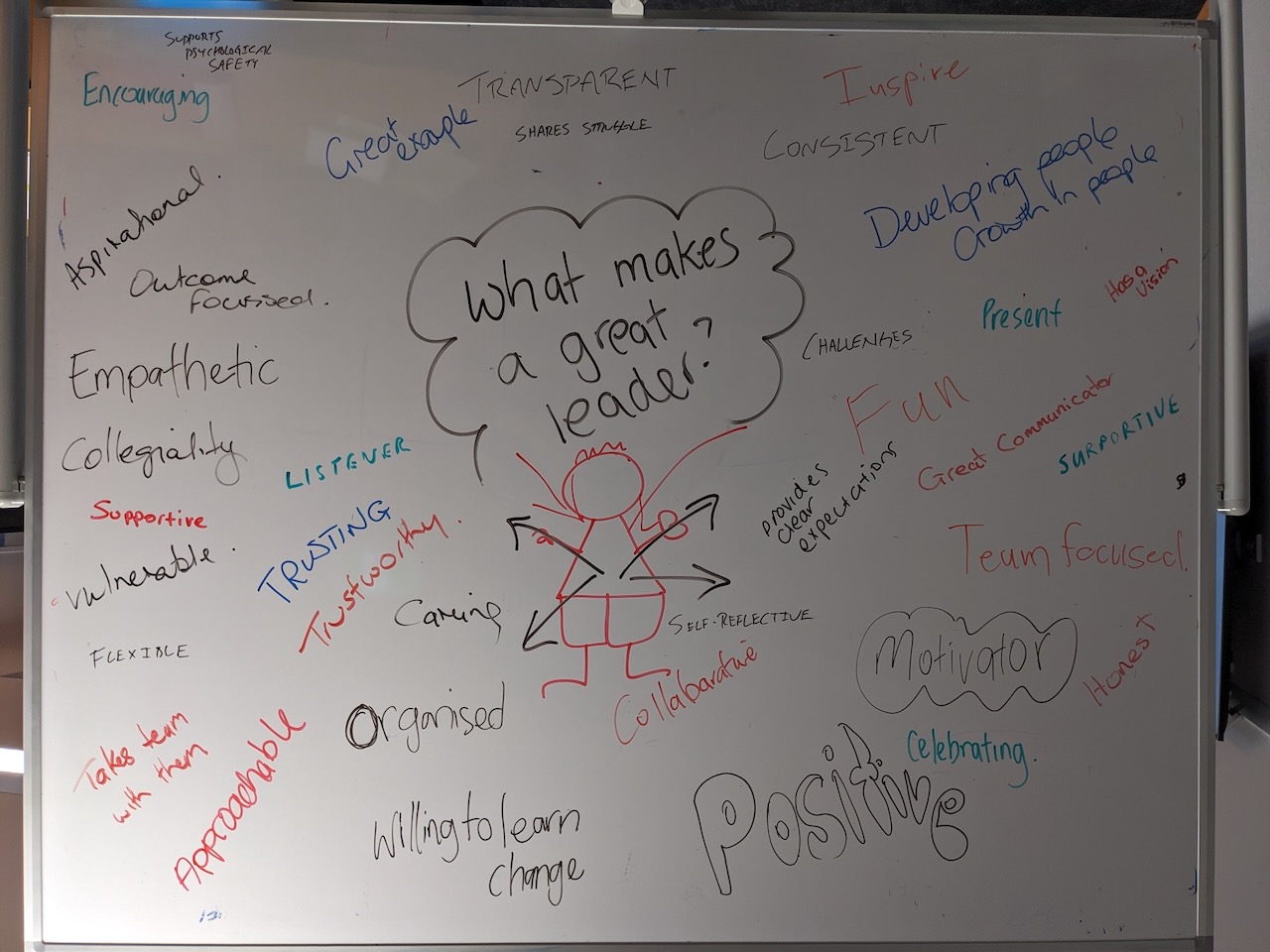
It’s really about people who care about empathetic and ethical leadership, and different conceptions of leadership, and how does leadership show up when you’re not in a position of power, right? And what does leadership mean — all the different ways people relate to that word, which I am so deeply interested in and have studied and have practiced and have developed trainings on, as imperfect as they may be, about this concept of leadership and what it could be and should be and is to different people.
I hear those dots connecting to why you studied political science in the first place.
Yes. And then learning from everyone in our cohort gave me confidence that it was okay for someone like me to try to run for office, and that I could have a place also. CLP gave me the confidence that, yeah, a sensitive person, someone who has been called ‘fragile’ as a derogatory, that there’s a place for someone like me also.
It’s taken me many years to understand my sensitivity and fragility are massive advantages in navigating life rather than things to be ashamed of. Because as I learned, being fragile doesn’t mean ‘something bad happens and I break.’ It means I am able to pick up on stuff more quickly, can feel things and make decisions about them with more information that I wouldn’t have otherwise.
So that’s what CLP gave me. It was listening to and learning from everybody else and their experiences. Some people had similar experiences to me in some ways. Some people had such different experiences, lives, ways of relating to stuff, pressures, ways of thinking. They were so different from mine that before I had met them and talked with them, I couldn’t have even conceived of how many amazing and beautiful ways people have lived life and have related to life.
There’s a lot of weird stuff that prevents everybody who lives in society from even thinking, “should I do this too?” I really want this campaign to inspire people that you, and you, and you, and you, y’all, please throw your hat in the ring. Our democracy is under threat and we need every reasonable person, every caring person, to try. It should be like jury duty. You get in, you do your service, and you get the hell out of there and let someone else do it.
Truly, I just don’t know if I hadn’t been through CLP, I cannot see how I would have made this decision now — because I wouldn’t have felt like it was okay for someone like me to do. That hopefully would have come later, but I don’t think I would have believed it right now. Sometimes I still question it. Maybe that’s healthy.
Thank you for sharing. I’m so used to hearing the phrase “someone like me” as connected to gender and race — I’m curious if those also factored into your thinking about running?
Thinking about running definitely made me feel some of the same hesitation I had applying for CLP, since male and white is way overrepresented in elected politics.
And honestly, if folks look at what I am doing and what I’m running for, and they say, ‘I would prefer not to support you because we really don’t need any more white men,’ that is a totally acceptable and absolutely fair conclusion to come to. People who look like me are totally, massively overrepresented.
And, we need more men who own their full humanity and vulnerability, who aren’t being drawn into the vortex of the so-called Manosphere. It’s a different form of leadership to actively steer away from the toxicity of white supremacy and patriarchy.
That’s fair. I do feel like, honestly, that’s my responsibility as someone who looks like me, someone who’s a white man, because I can navigate — and this is awful and it shouldn’t be true, but it’s the truth — that I can navigate in spaces that other people who don’t look like me can’t. Because I have that responsibility, that is what I have always tried to do in my work.
That’s the decision I made way back in community college, that I want to get in the system, control my emotional outbursts, become more disciplined, and navigate in those spaces where people who look like me are more easily able to navigate and open the doors wider and wider and wider so everybody can come through them. That’s literally the whole point.
I respect the call for everyone to throw our hat into a ring, while I’m also aware that not everyone is built for elected office; but we also bring different superpowers that are also needed.
Well, I want to challenge what you said there. I do think more people are “built” for public office than give themselves credit for. And we need electoral systems to support those folks — like small-donor elections programs like we have in Portland.
But yeah, even with that, there are tons of different ways to help make stuff better, and even if running for office were more accessible and more open to more folks there would be some folks who’d prefer not to, and that’s totally cool.
My point about saying everyone should throw their hat in a ring is… it’s less about a literal “everyone.” It’s that we need more, different kinds of people in elected office, especially people who are not power-hungry, ego-driven, selfish, shitty people. We need more sensitive, vulnerable people who have never thought about running for office to at least give it a thought.
I have a strong bias towards making campaigning and public service less of a secret club that not everyone is in. The word “public” is in “public service,” so why does it seem like the machine to get people elected is some secret club that not everybody can be in? That, for me, is totally unacceptable.
I hear you, and appreciate that. How is the campaign going; can you share what you’re learning at this point or is it too early?
It’s going great! It’s stressful, it’s exhilarating. I’m learning so much. I’m meeting a lot of people, and I’ll say, yes, it’s still early, but two things that are important.
One is that I’ve become more and more convinced that I don’t need to do anything other than run as myself. Thank you, CLP. That’s a big deal for me, hearing from other people, learning from other people, having the balance of my understanding of how people exist and live and think and experience it. I don’t know if I could have gotten there, or at least maybe not now. So that’s one thing — I’m more and more convinced, I don’t need to do anything except be myself.
And the second thing — again, it’s still early — but doing this is such a beautiful excuse to talk with people and learn from them. What do you care about? What is on your mind? What do you think we should be focusing on? What are your pressures? What is hurting right now as you think about your relationship to the city that you live in? What doesn’t feel right to you? What do you think is being forgotten?
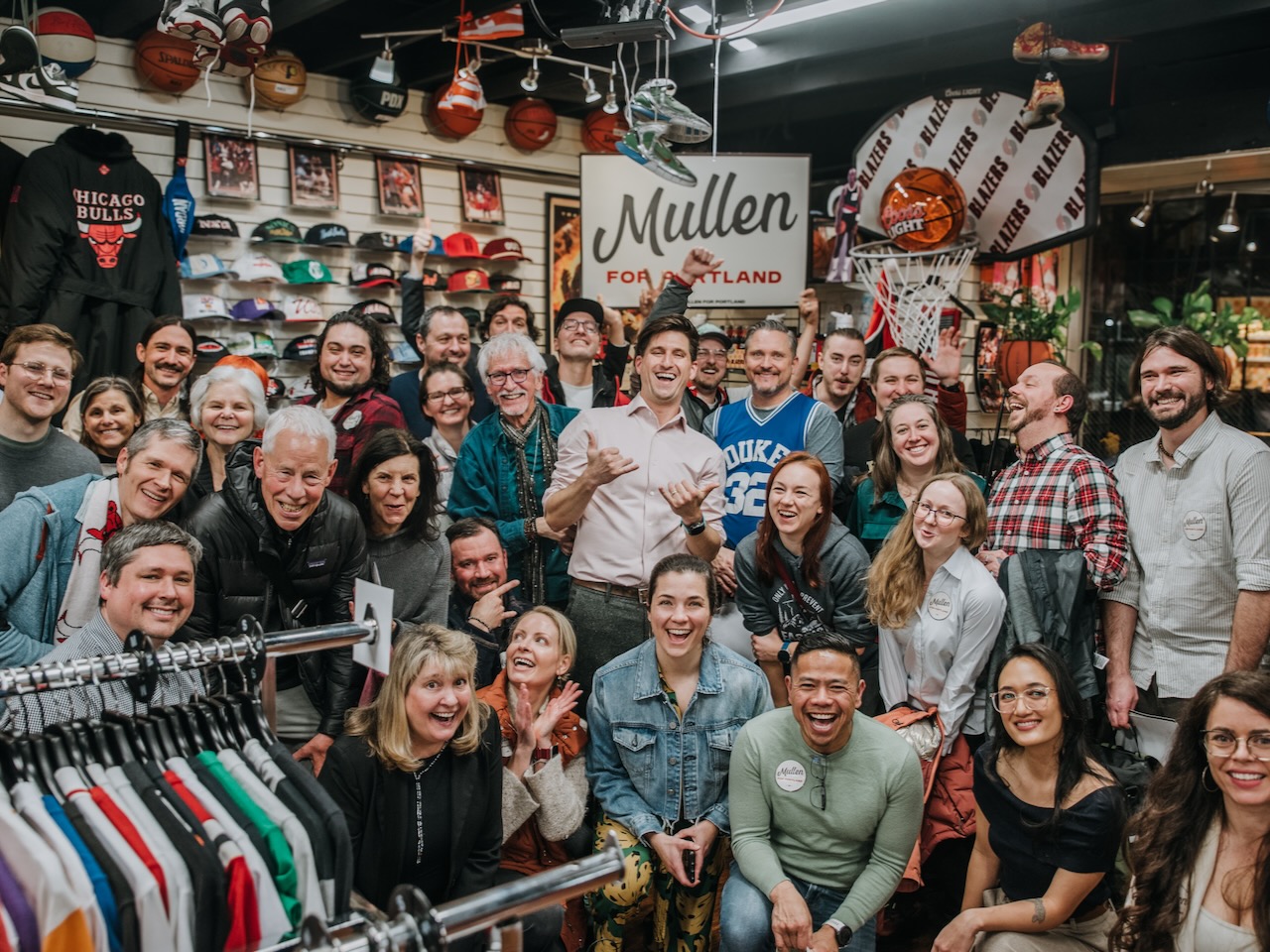
Maybe you can ask people those questions just randomly in the world. I didn’t used to do that. I would feel scared. But the fact that there’s a little campaign sign that says ‘Mullen For Portland,’ no one questions why you’re asking them, and it doesn’t feel weird. It’s awesome.
And I’m also learning a lot about my self-limitation around social interaction. Guess what, Brandon? It was kind of all in my own head. A restriction I put on myself, all made up. Damn it, I could have had so many cool conversations, but I was afraid to!
I know what you mean, those things that are overdue, and also better learned today than tomorrow. I reflect on the CLP values exercise probably weekly; my top one is integrity — am I being who I am, and supporting others in being who they are. I’m hearing a lot of that core value in what you’re sharing.
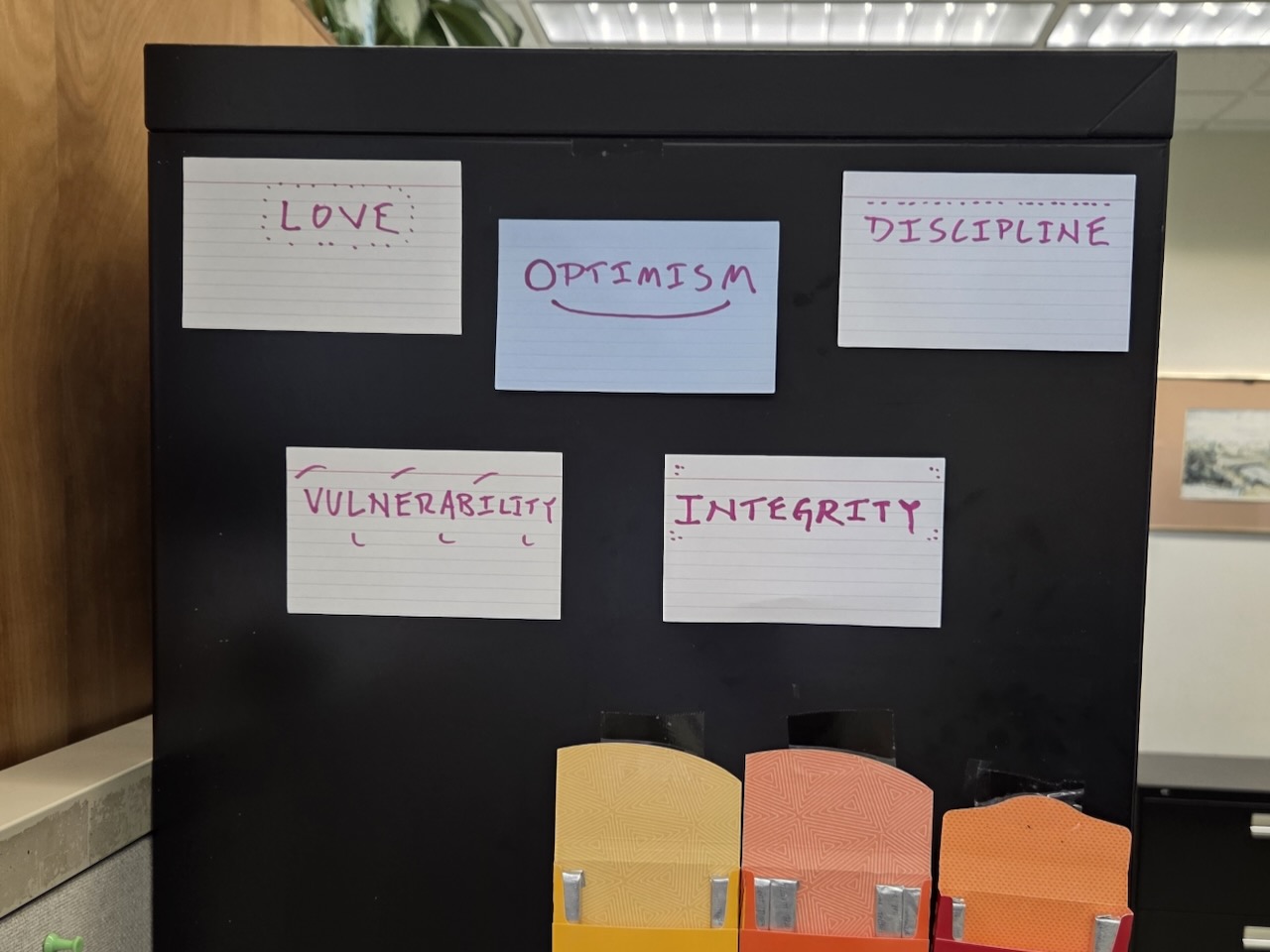
To that point — don’t even move from that thought. I’m looking for something that came from CLP… here it is. One of the exercises that we did in our cohort was to write down on an index card, a quality or a way of being that was very important to you. Maybe the prompt was even “that you could not live without.” In our group, we wrote down five of them.
And then the hard part was, we were asked to give one of them up. Then you have to do it again. And then you do it again.
So my five were love, discipline, vulnerability, optimism, and integrity.
And when we peeled them away and peeled them away, the last one — and there’s a picture of me holding it — is integrity. That was the last one that I held onto. That’s informing my life. But it’s also informing this campaign — if I can’t do it with integrity, I cannot be doing it. If I abuse that, I need to stop.
And the good news is the people who are helping me, and I’ve gotten more confident that all I need to do is be myself. I’m more confident that, win or lose, I will have no problem doing that, and I’m so grateful for that.
Interview with The Circle’s Creative Director & Editor, Lara Herscovitch (Cohort 10). To reach Lara directly: thecircle@clpnewhaven.org or Lara@LaraHerscovitch.com
Learn more about Brandon at his campaign website or LinkedIn
Connect with Brandon directly: brandon@mullen4pdx.com