
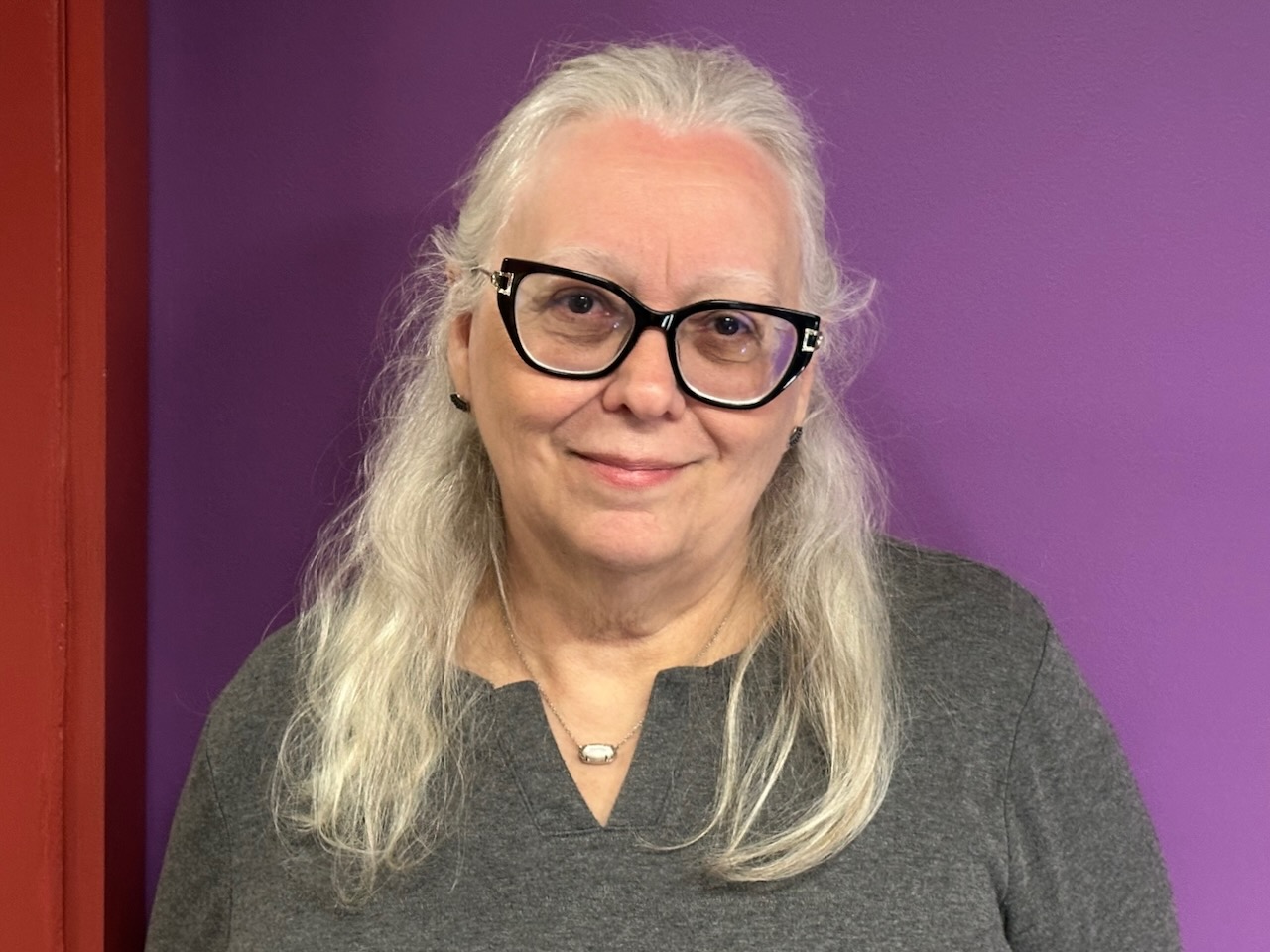
photo by Lara Herscovitch
Is America both sides of the coin we come to make? In these challenging times, I question what makes this country great — and I hope we can re-make her for all of us.
Over 50 years ago, when I was in college, I was walking on Wall Street in New Haven. I tripped on the uneven sidewalk, distracted by a building that had no business being there — bold, geometric, glowing white in a neighborhood I was told I also had no business being in.
It was the Beinecke — Yale’s Rare Book & Manuscript Library. Located at 121 Wall Street, it is entirely devoted to rare books and manuscripts. Rare means printed anywhere in the world before 1800, and books, newspapers and broadsides printed in the United States before 1851.
Mostly underground, you can’t see its depth from the street.
I didn’t go in that day. I have a door phobia, and I wasn’t a Yale student. So the phobia won; I had learned, by then, that certain doors weren’t meant for me.
But a few weeks later, a public transit ad changed that. Open House Celebration for the Beineke’s tenth anniversary. I scribbled in my notebook:
yale – marble building – 12 – 4.
I went. And I returned the next year, for the country’s Bicentennial.
Both times, inside, under six stories of translucent Vermont marble, I saw the Dunlap Broadside — the first printing of the Declaration of Independence. Two hundred copies were made. Twenty-six survive. Yale has one of them.
We hold these truths to be self-evident.
Beside it, the Beineke curators had placed the Declaration of Sentiments from the 1848 Women’s Rights Convention.
We hold these truths to be self-evident; that all men and women are created equal.
They lay there side by side; not arguing, but speaking volumes by virtue of placement alone. The founders hadn’t struggled free of the contradiction. Neither had the nation, and the primary sources some uphold as pure and sacred clearly show how un-finished, how incomplete we are.
I learned that the official printer of the Declaration of Independence is John Dunlap of Pennsylvania. The commentary labels explain that there would be a “committee appointed to prepare the declaration, superintend & correct the press.”
The story of the first printing is put forth as:
On the evening of July 4th, the broadside was brought to Congress by Dunlap who had turned the handwritten text into ‘the equivalent of a presidential proclamation.’
There is only speculation as to which members of the drafting committee were present to proofread it; questions remain as to who read the proof. Within weeks of its first printing, the Declaration of Independence would be in newspapers.
It formulated the awareness in me of the powerful role of newspapers (and media in general) in democracy. My reverence for the importance of media continues to this day, with my full-time, all-volunteer director role at a public access TV station and art gallery in Wallingford.
The initial step inside the revolving glass doors was a transformative experience for me. Upon leaving, I felt more whole than I had upon arrival. If I had never gone in, I would have wondered: How can rare books be relevant to the community?
In the same student notebook I wrote the Open House information in, a poem was emerging — “Red, White and Blues” — about seeing the Statue of Liberty for the first time.
I was a girl, looking up at a copper woman holding a torch. I followed the thread and set words to paper, claiming the moment even though it felt like hubris to do so within in the marbled light of rare works. (The Beineke still terrifies me.)
What did America mean to me? In 1975, poetry helped me untangle part of my answer then, however uncertain:
I was looking up, at Lady Liberty,
in the harbor of immigrant city,
when an old man, cautions questioningly,
What does this lady speak to me?
…America is both sides of the coin
we come to make. That’s what makes her great…
I wrote it feeling not yet sure I had the standing to call myself a writer, or to claim the liberty Lady Liberty promised. Women’s right to vote was barely fifty years old. The right to my own credit card, not yet won.
I knew the contradictions. I chose hope, claiming it while knowing it was all imperfect, unfinished. I still choose hope; I know that the struggle remains, and that democracy is a creative practice.
I also started learning about the stories we choose to foster.
Thomas Paine died a pauper and in obscurity. He fueled the colonies’ revolution against Great Britain with his pamphlet Common Sense, and later was ostracized for promoting human rights and democracy, opposing slavery and speaking out against George Washington.
On the other side of that coin, David Humphreys gets speeches and ceremonies at Grove Street Cemetery every Independence Day. He was an aide-de-camp to Washington, a Yale man who seized a Native tribe’s reservation for his woolen mill.
Two hundred and fifty years on, the contradictions have not resolved. They have accumulated. Stories of erasure emerge as Breaking News. Jefferson’s self-doubt and Paine’s inconvenient truths. The Dunlap Broadside and the Declaration of Sentiments. The men and women honored, and the men and women erased.
At the Beineke’s annual Nation’s Founding Exhibit around July 4th, actors, in costume, read the Declaration of Independence and Frederick Douglass’ 1852 oration,” What to the Slave is the Fourth of July?” (The Frederick Douglass Papers were added to the library’s rare holdings in 2009, and were digitized in 2021.)
These are not footnotes to the founding. They are the founding — still unfinished.
I hope that connecting with New Haven’s history is a means of finding connection today, in these challenging times. America is both sides of the coin we come to make. Now more than ever, I question what makes her great — and whether we, as a people, can come together, willing to make her for all.
Contact Susan via WPAA-TV’s website, LinkedIn, Facebook or SusanAdele@wpaa.tv